Blog
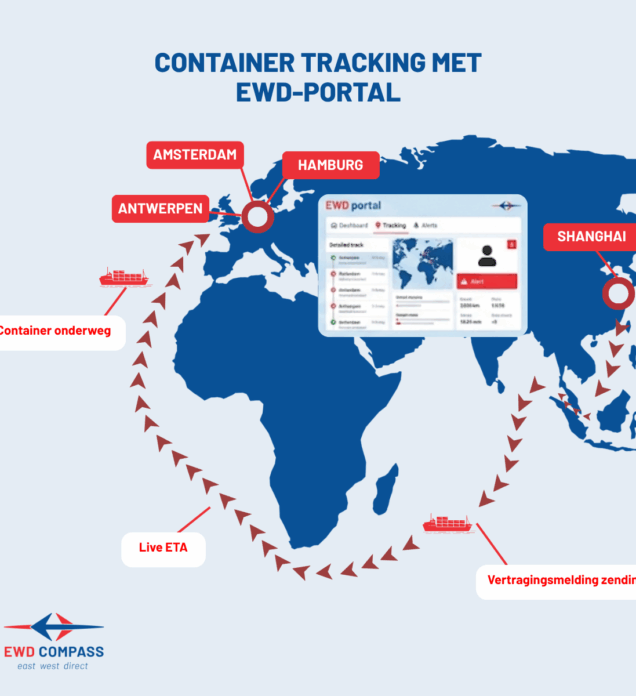
China container tracking: how your organization can gain control over transport from China


When you move goods across borders, you inevitably encounter a digital language spoken worldwide: the HS code. Whether you run a growing online store or are an experienced industrial importer, understanding these codes is essential to avoiding delays, fines, and unnecessary costs.
But what exactly are HS codes exactly, and why are those numbers so crucial to your business operations? In this article, we’ll dive deep into the world of commodity codes.
Table of Contents:
The abbreviation HS stands for Harmonized System. It is an internationally standardized system of names and numbers used to classify traded goods. HS codes consist of six digits. The system is administered by the World Customs Organization and is used by more than 200 countries.
Essentially, the answer to the question “What is an HS code?” is simple: it’s a unique passport for your product. This allows customs authorities worldwide to know exactly what’s inside a container or package, without having to understand the language of the invoice.
Classifying your goods correctly is not just an administrative formality; it is a crucial part of your compliance and cost management. The code stipulates:
An HS code has a hierarchical structure. The longer the code, the more specific the product description.
You can look up the correct codes yourself using the Customs tariff schedule.
In practice, choosing the right code is often more difficult than it seems. This is because products frequently appear to fall into multiple categories. The choice you make here has significant financial consequences.
A concrete real-world example: Suppose you import steel parts for a building. You could classify them under:
Although at first glance it may seem to amount to the same thing, the corresponding import duties can vary significantly. Customs ultimately decides whether you have chosen the correct category. If you make an incorrect assessment, you risk not only a substantial additional assessment of the overdue import duties, but also a fine.
Knowing the right code can literally put money in your pocket. The EU has signed trade agreements with various countries. A good example is the free trade agreement between the EU and Vietnam. By combining the correct HS code with a Certificate of Origin (CO), you can often benefit from a significantly lower import tariff or even a zero tariff.
Keep in mind, however, that governments can also create barriers. In the case of trade barriers, tariffs may actually be temporarily increased. It is therefore essential to always stay up to date on the status of your product code.
Are you unsure about the correct classification, just as in the example of steel structures? Classifying complex products (such as a machine with multiple functions) can be quite challenging. In that case, you can request a BTI (Binding Tariff Information) .
A BTI is a written decision from customs that provides you with certainty for three years regarding the code to be used for a specific product. It is legally binding throughout the European Union and prevents unpleasant disputes later on during inspections.
Now that you know what HS codes are, you probably understand that an incorrect code can have major consequences for your supply chain. Whether it’s customs duties in China or trade within Europe, make sure your paperwork is in order.
Need help with your customs issues? At EWD-Compass , we’re happy to help you get a handle on your international trade flows. Feel free to contact us for advice on product classification and optimizing your import duties.