Blog
China container tracking: how your organization can gain control over transport from China


In the world of international trade and quality control, the term “AQL” is commonly used. But what exactly does AQL mean, and why is it so crucial in the quality control process, specifically in China? AQL stands for “Acceptable Quality Limits”; it is a method used to determine whether a production run meets the specified quality requirements. This blog takes a closer look at the AQL method and how it is applied in quality control.
AQL, or Acceptable Quality Limits, is a statistical tool that helps determine whether a batch of a product should be accepted or rejected. It is an essential component of quality control systems used by manufacturers worldwide, with a particularly strong emphasis in China—where large volumes of production take place. The significance of AQL goes beyond a simple definition. It represents the maximum margin of error considered acceptable during a random sample inspection of a production batch. When we speak of “acceptable quality limits,” we are referring to the threshold value within which the number of defects in a sample is still considered acceptable for the batch approval process.
The AQL method is used to determine a sample size for inspection and to establish the acceptance or rejection levels for that sample. For example, an AQL of 1% means that the quality inspector must not find more than 1% of defective items in the sample. If the number of defects exceeds this limit, the entire lot may be rejected.
During our quality inspections at factories in Vietnam and China, we use the AQL check standard. Our inspectors randomly select samples from a batch and conduct tests to assess whether these samples meet the specified quality requirements. If the results fall within the AQL, the batch is approved. An AQL check begins with determining the acceptance level appropriate for the product and the market for which it is intended. Using the AQL table helps determine the sample size as well as the acceptance and rejection levels. Our inspector will then test the sample against the established criteria.
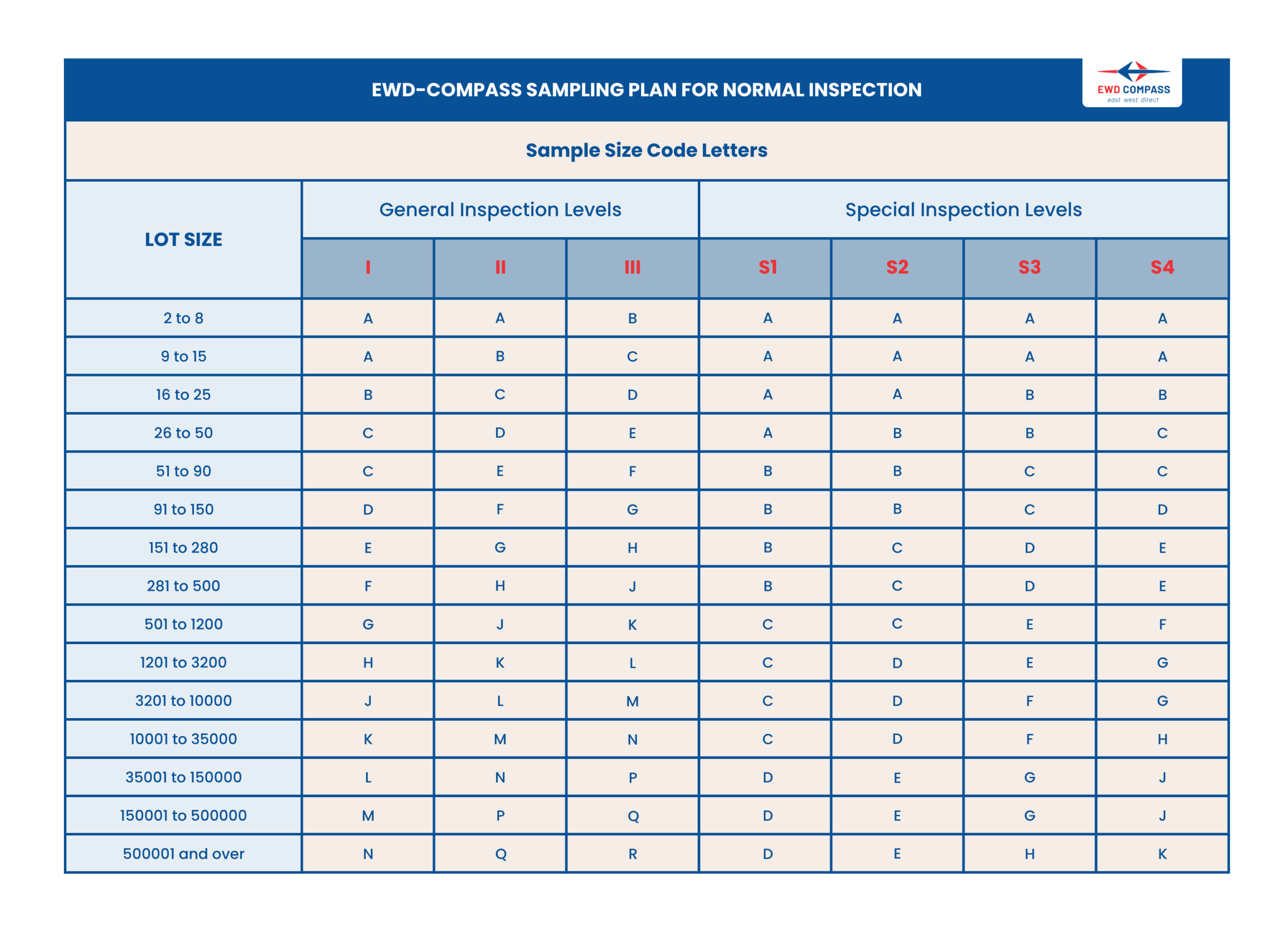
Appendix 1: Sample Size AQL Table – EWD-Compass Sampling Plan for Normal Inspection
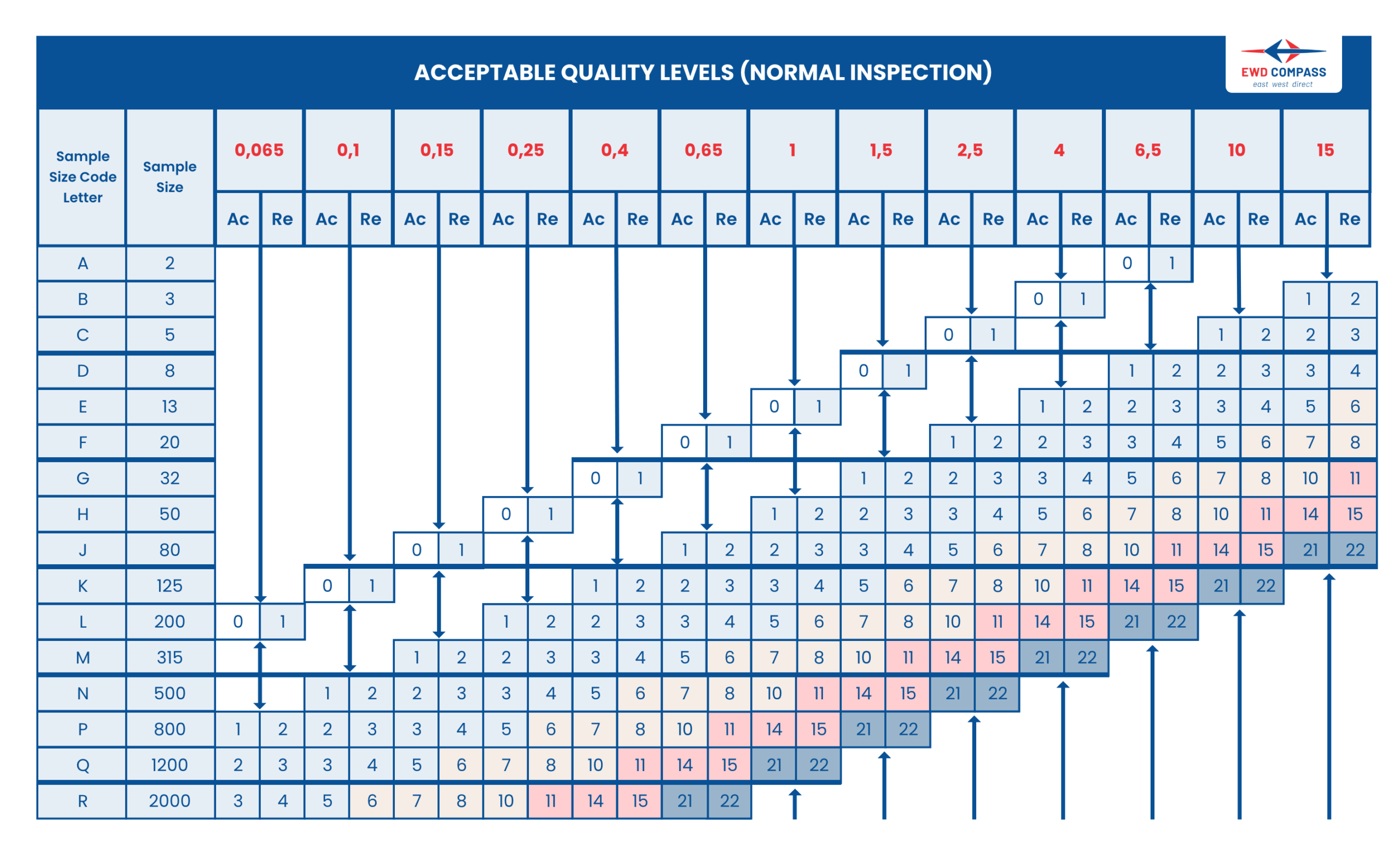
Appendix 2: AQL Example—Acceptance Quality Levels
For importers—particularly those who import products from China and Vietnam—an understanding of the AQL method is essential . It enables them to ensure consistent product quality and protect their interests. Choosing the right AQL levels is essential for meeting consumer expectations and successfully import from China or Vietnam.
At EWD-Compass , we use the AQL method to ensure that the products we inspect for our customers meet their specific quality requirements. We understand that “acceptable quality limits” vary by product and by client, which is why we tailor the AQL standards for each quality control to the customer’s requirements. Understanding and applying the AQL method is essential for maintaining quality standards, especially when dealing with mass production from China and Vietnam.
Exactly what these quality standards are, and which aspects need to be inspected, will be determined in advance through consultation between the importer, the manufacturer, and EWD-Compass .
For more information on how AQL can be applied to your quality control, please contact us and ensure the highest quality for your products.